
Essential Considerations for Mission-Critical Air Transport
Medical aircraft face challenges no other flights encounter. They launch at midnight in snowstorms, land on highways, and transport critical patients. It’s much more complex than just flying.
Weather Calls the Shots
A helicopter waits on the hospital roof. Forty miles out: heart attack victim, rural farmhouse. But thunderstorms are building in the west. The pilot checks three weather apps while the medical crew loads supplies.
Do they risk it? The patient needs help now, but flying into a storm helps nobody. This occurs frequently across the country. Reading weather is crucial for flight teams’ survival. Morning fog clears by noon. Afternoon storms appear quickly. Rotor blades ice up at specific altitudes. Each weather pattern demands a different response.
Experienced pilots keep mental maps of safe spots along their routes. That old airstrip behind the abandoned factory. The football field at the county high school. The wide parking lot at the outlet mall. When weather turns nasty mid-flight, knowing these locations makes the difference between landing safely and pushing forward into danger.
The Weight Game Gets Serious
Here’s something most people never think about: a helicopter that flies fine with three people might struggle with four. Sounds simple until you’re deciding whether to bring extra blood supplies or a second paramedic. Both could save lives. You can’t take both.
Temperature messes with everything. On a ninety-degree day in Phoenix, that same helicopter carries less than on a cool Seattle morning. Thin mountain air reduces lifting power even more. Pilots run these calculations constantly, adjusting for fuel burn, passenger weight, and equipment loads.
Equipment Faces Brutal Conditions
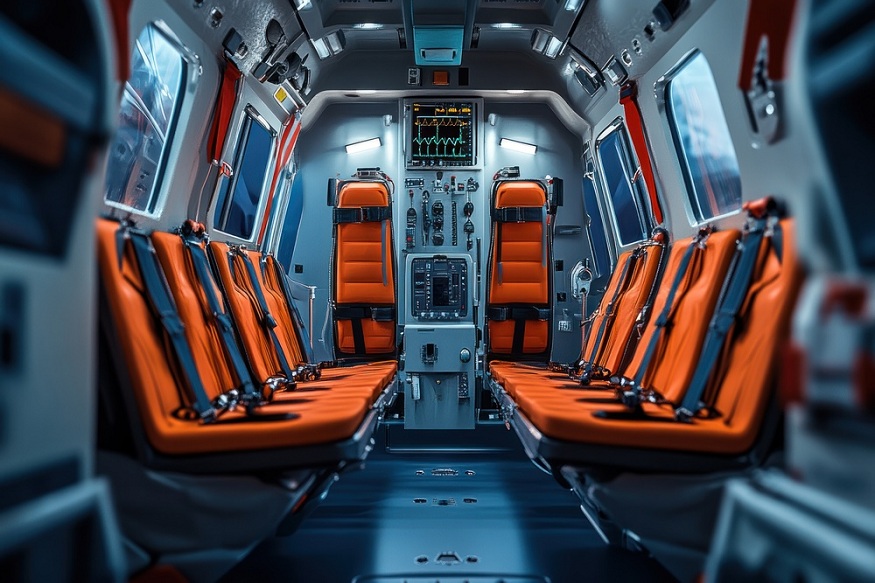
The inside of a flying ambulance takes a beating. Everything shakes constantly. Altitude makes electronics act weird. The cabin fluctuates between freezing and boiling. Air ambulance interiors appear clean, but the experts at LifePort explain that functionality demands advanced engineering.
Take something basic like a heart monitor. It rests on a cart in a climate-controlled room. Imagine that monitor in a helicopter, bouncing at 5,000 feet, as paramedics struggle to read it. The temperature fell thirty degrees after takeoff. Will the battery last? Can the screen be seen in sunlight? Medical staff describe monitor failures, false IV alarms, and radio interference. They prepare for equipment problems like sailors prepare for storms.
Teams Build Trust Through Repetition
Watch a medical flight crew at work and you’ll notice something interesting. They barely talk. One look, a gesture, or a word suffices. This chemistry doesn’t happen overnight.
Monday morning, they’re practicing water landings. Tuesday, they run through power failure scenarios. Wednesday brings patient handoff drills. Sounds boring? It is. That’s the point. When genuine emergencies hit, muscle memory takes over. The pilot knows exactly where the nurse keeps backup supplies. The paramedic knows which switches the pilot needs access to. They all move like practiced dancers.
New crew members sometimes struggle with this silent coordination. They want to discuss everything, explain their actions, ask questions. Veterans know better. Too much talking clutters radio channels and distracts from patient care. They save conversations for debriefs after landing.
The Hidden Army on the Ground
Most people don’t see the support behind that landing. Dispatchers manage aircraft, like air traffic controllers, but with patients, not travelers. Mechanics inspect aircraft, fixing what vibration loosens. Fuel trucks wait, rotors spinning, for quick refueling—a dangerous but efficient process. Supply teams resupply medications, equipment, and oxygen. Someone manages flight permits, insurance, and landing zone coordination.
Conclusion
Mission-critical air transport succeeds when dozens of elements align perfectly. Miss any single element and missions fail. If you get them all correct, patients who’d have died fifty years ago will go home. The margin for error is slim, requiring intense focus.